
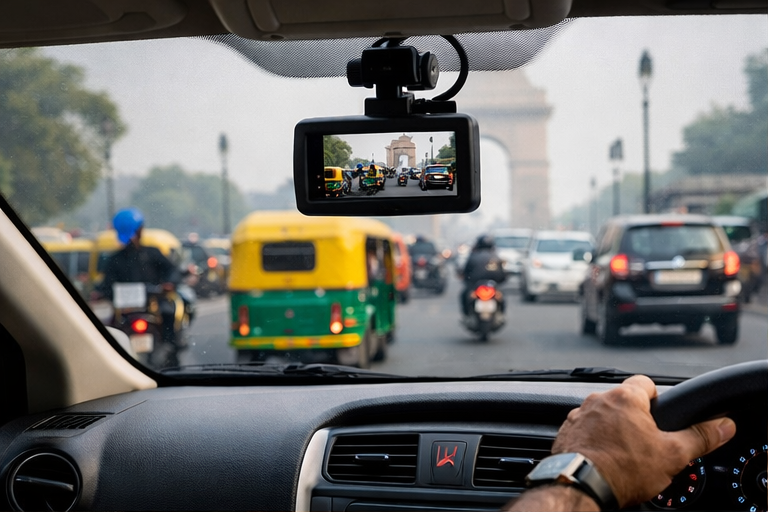
A subtle but meaningful transformation is underway on Indian roads. Increasingly, drivers are installing dash cams—not as a premium add-on, but as a practical necessity for safety, transparency, and peace of mind. In a country where traffic conditions are often chaotic and unpredictable, dash cams are fast emerging as tools that can reshape not just how incidents are recorded, but how people drive.
India continues to face a serious road safety challenge, with one of the highest accident rates in the world. While improvements in infrastructure, enforcement, and awareness are ongoing, everyday realities—ranging from disputed accidents to road rage—leave many drivers vulnerable. In such an environment, a dash cam serves as more than just a recording device; it becomes a silent, reliable witness.
By continuously capturing the road ahead (and often behind), dash cams provide an unbiased account of events. In the aftermath of an accident, where conflicting narratives are common, this footage can establish facts, determine responsibility, and protect individuals from false claims. For many, this alone justifies the growing adoption of dash cams.
However, the real transformative power of dash cams lies beyond post-incident evidence—it lies in prevention. The simple awareness that one’s actions may be recorded, either by their own camera or someone else’s, can significantly influence driver behaviour. This subtle psychological shift encourages greater discipline: fewer abrupt lane changes, better adherence to signals, and a more cautious approach overall. Over time, such behavioural nudges can help foster a culture where safe driving becomes a shared social norm rather than a forced obligation.
Indian roads are often marked by erratic driving patterns and frequent violations. Dash cams introduce a layer of accountability that extends beyond law enforcement. When drivers know their actions can be documented and potentially reported, they are more likely to act responsibly. This ripple effect—where individual awareness shapes collective behaviour—can play a crucial role in improving road safety culture across the country.
Dash cams also act as a safeguard against fraudulent practices, such as staged accidents or extortion attempts. In situations where drivers might otherwise feel pressured to settle disputes on the spot, recorded evidence provides confidence and protection. Similarly, in the insurance ecosystem, dash cam footage can streamline claims, reduce disputes, and ensure fair outcomes—making the entire process more efficient and transparent.
Despite these clear benefits, adoption in India remains limited. Many still perceive dash cams as optional, while others are unaware of their broader impact. Concerns around privacy and misuse of footage do exist, but they can be addressed through clear regulations and responsible usage guidelines. These concerns should not overshadow the significant role dash cams can play in enhancing public safety.
Given the scale and complexity of India’s road safety challenges, there is a compelling case for wider adoption—perhaps even policy-level encouragement or mandates. Making dash cams a standard feature in vehicles, much like seatbelts or airbags, could dramatically improve accountability and evidence availability. More importantly, it could accelerate the behavioural shift needed to build safer roads.
Globally, dash cams have already proven their value in high-traffic environments. For India, the impact could be even greater. As these devices become more affordable and accessible, their potential to influence driver behaviour and promote a culture of responsibility becomes increasingly significant.
Encouraging a dash cam culture is not about surveillance—it is about awareness, responsibility, and empowerment. It is about creating an ecosystem where drivers are more mindful of their actions because they know those actions matter—and may be recorded.
In the end, safer roads are not built by rules alone, but by behaviour. Dash cams, in their quiet and consistent way, have the potential to shape that behaviour—making Indian roads not just better documented, but genuinely safer for everyone.